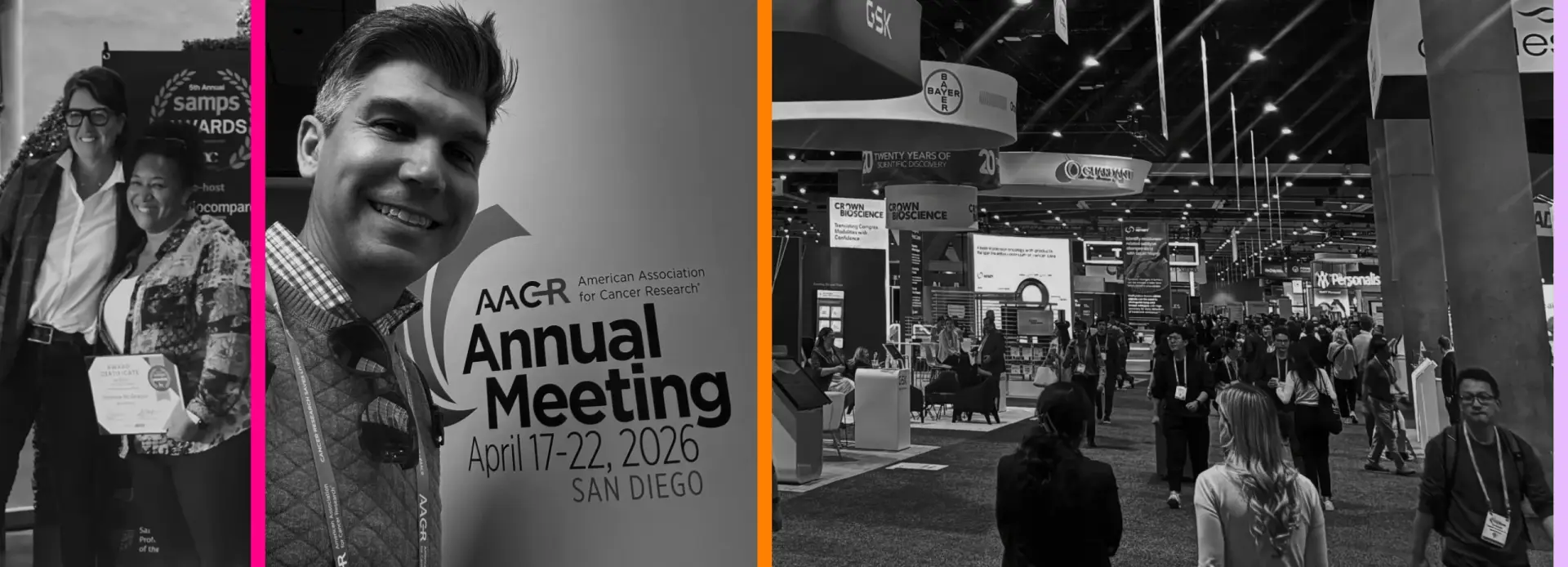
The standard greeting at any exhibitor booth is almost always: “How has the show been for you?” The responses typically range from “better traffic than expected” to “I wish we were closer to the action.” But while those familiar conversations were certainly happening in San Diego this year, AACR 2026 felt different.
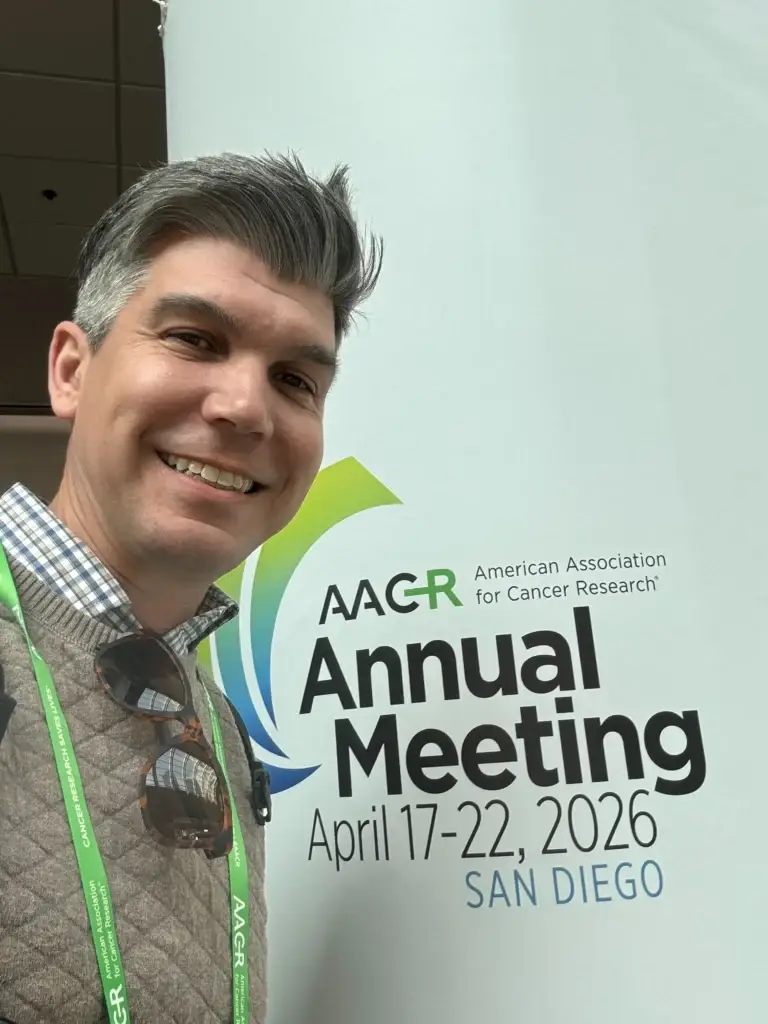
The customary icebreakers were quickly replaced by deep dives into clinical milestones, major product launches, and a genuine sense of velocity for an industry ready to move forward. There was a palpable shift in the air. We aren’t just “chasing” cancer anymore. We are starting to outsmart it. Despite the constraints from recent macroeconomic headwinds, the research community is forging ahead at an exhilarating pace. From stunning KRAS data in pancreatic and lung cancers to the continued ascent of spatial biology and molecular residual disease (MRD) testing, the science is moving faster than ever.
As I walked the floor, it became clear that we are entering a new era of oncology. An era defined not just by the molecules we discover, but by how effectively we can communicate their potential to the world.
The Clinical Momentum: "Everything is Coming Up KRAS"
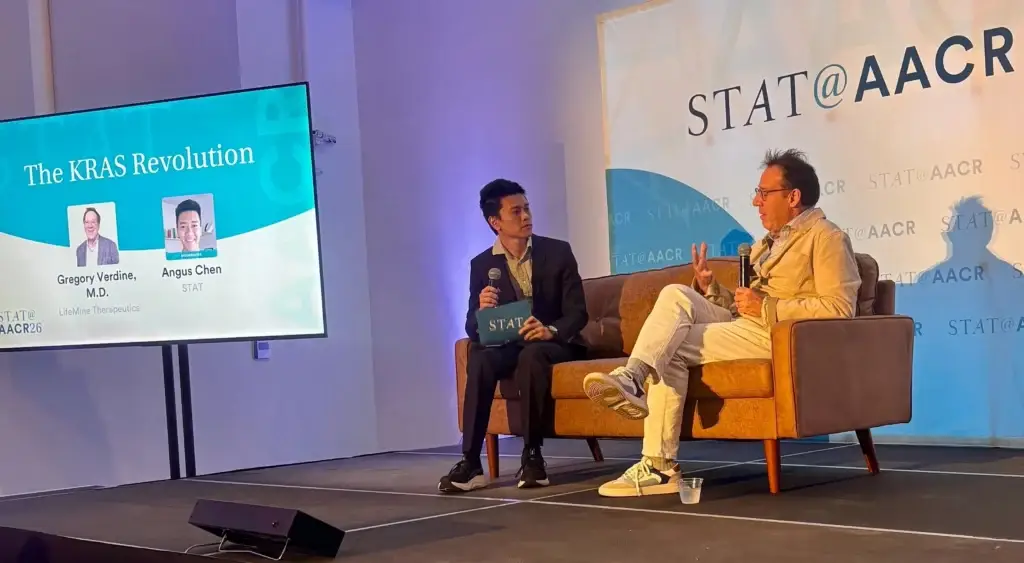
One of the most significant highlights of the event was the “KRAS revolution.” For decades, KRAS was considered “undruggable,” particularly in the context of pancreatic cancer. At this year’s meeting, the atmosphere shifted from one of mere hope to one of tangible evidence. As Dr. Lillian Siu noted during a STAT event, we may be witnessing “the beginning of the end…for pancreatic cancer as we know it.”
At this year's meeting, the atmosphere shifted from one of mere hope to one of tangible evidence.
The data presented by Revolution Medicines regarding their experimental drug, daraxonrasib, was a major talking point. The drug more than doubled survival in second-line pancreatic cancer compared to chemotherapy. While a six-month median survival increase is a humble start in the face of such a devastating disease, the 58% response rate in combination trials signals a massive leap forward. RevMed backed that up with equally promising data in lung cancer.
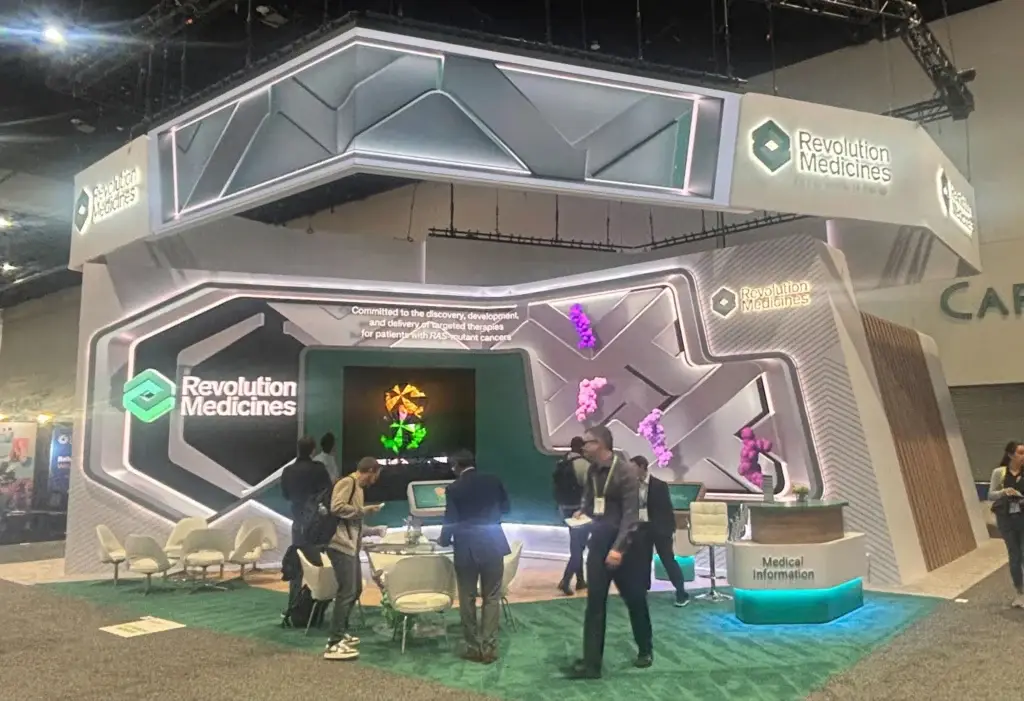
Data for zoldonrasib showed a stunning 55% overall response rate and a 93% disease control rate. Most notably, the progression-free survival (PFS) reached 11.1 months—a dramatic increase over the 4.5-month standard of care.
The Science Behind the Breakthrough
These breakthroughs didn’t happen overnight. They are the result of decades of persistence—moving from Kevan Shokat’s initial discovery of the “bump-and-hole” strategy to inhibit the “off” state of KRAS, to Greg Verdine’s invention of “molecular glue.” This technology, which allows small molecules to form complexes that contact flat targets, became the foundation for RevMed’s success after they acquired Verdine’s Warp Drive Bio. RevMed’s CEO Mark Goldsmith noted that their team’s critical pivot was converting these compounds into orally bioavailable medicines, significantly increasing their potency and patient accessibility.
The shift toward using these inhibitors in the adjuvant setting, supported by MRD monitoring to spare patients unnecessary chemotherapy, is where the real potential lies. This is about more than just data. It’s about giving people meaningful portions of their lives back.
Industry Breakthroughs in Tech
Beyond the clinical papers, the progress in spatial biology and single-cell analysis was front and center. These technologies are becoming essential for understanding the tumor microenvironment and predicting which patients will respond to new targeted therapies. The integration of MRD for recurrence monitoring is set to redefine how we measure success in clinical trials as well. The exhibitor booths of MRD-focused companies rivaled the scale of traditional Big Pharma—a clear sign of the intense investment in this race for market superiority.
The Role Communications Plays In Outsmarting Cancer
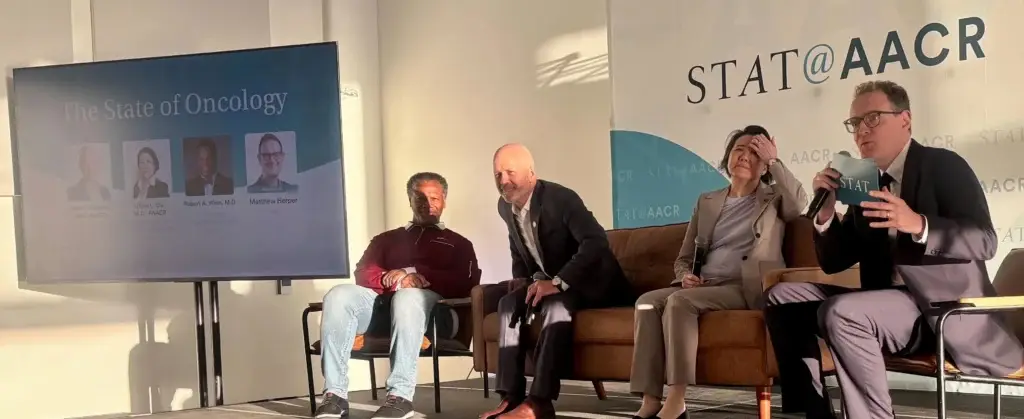
I was personally inspired by the STAT “Outsmarting Cancer” event featuring Dr. Keith Flaherty (current president of AACR), Dr. Lillian Siu (former president of AACR), Dr. Robert Winn, and the aforementioned Dr. Gregory Verdine. Moderated by Matt Herper, Damian Garde, and Angus Chen, STAT’s events are always engaging, relevant, and smart. Listening to these giants in cancer research and care discuss the state of the industry, I felt like I was surrounded by the “Oppenheimers and Fermis” of biological chemistry. And while the science discussed was profound, my biggest takeaway was actually about the importance of communication.
Dr. Robert Winn made a poignant point: “Science is a language. And we must be able to translate that language.” For those of us at HDMZ, this underscores our mission. Elegant science and breakthrough innovation is not enough for a life science brand or emerging biotech to succeed; they must also be multilingual. They must speak the language of the lab to satisfy the FDA, the language of the heart to recruit for trials and introduce therapies and diagnostics in underserved communities, and the language of impact to secure funding from investors. With cancer deaths down 34% since 1991 [1], we have a story of hope to tell. Now, we just have to make sure the world hears it in a language they understand.
For those of us at HDMZ, this underscores our mission. Elegant science and breakthrough innovation is not enough for a life science brand or emerging biotech to succeed; they must also be multilingual.
Celebrating Success: The Power of Mentorship
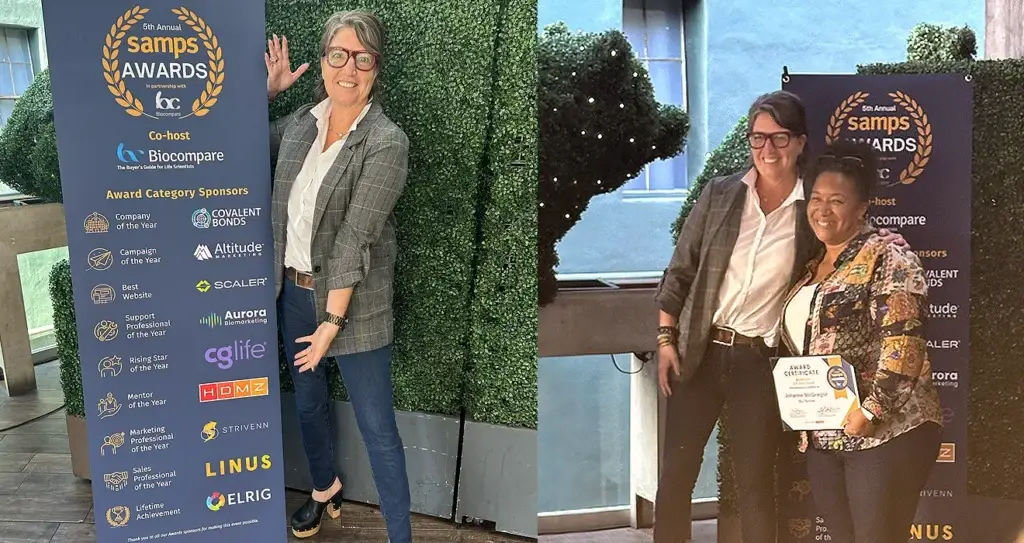
For the second year in a row, HDMZ sponsored the SAMPS Awards, which celebrate the biggest sales and marketing names and companies in the life science and applied research industries. Founded in 2012, SAMPS serves as an important professional development and networking community for our profession and sector. We were incredibly honored to sponsor the Mentor of the Year Award during the conference. Our COO, Rebecca Angelos, had the privilege of presenting the award to Johanne McGregor of Bio-Techne, a leader who truly exemplifies what it means to invest in others. We also recognized finalists Lars Sandström and David Oliva for their incredible commitment to developing talent. In an industry that moves as fast as ours, the guidance provided by these mentors is essential to ensuring the next generation of leaders is prepared to carry the torch.
The Onsite Vibe: A New Playbook for Exhibitors
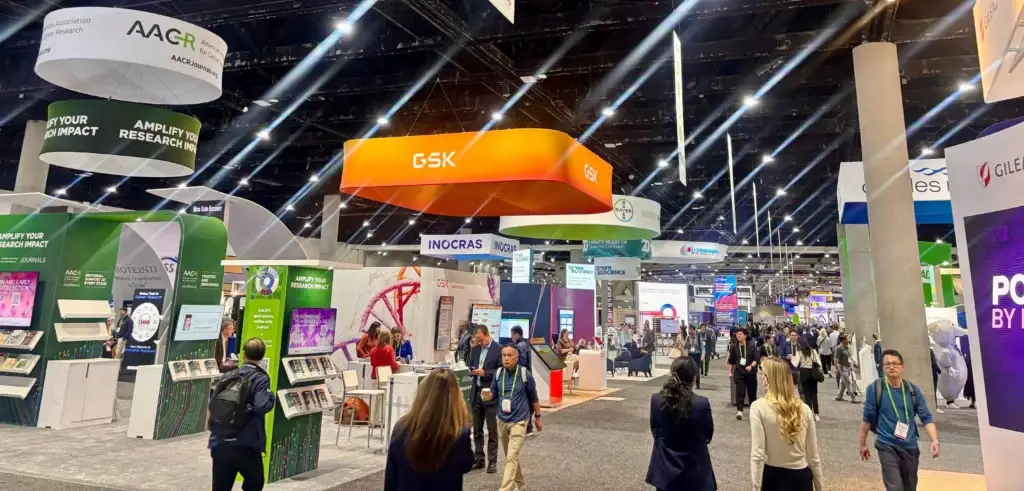
Beyond the clinical data, my conversations with exhibitors revealed a tactical shift in how companies are approaching major conferences. The “vibe” at AACR 2026 was one of high-quality engagement; unlike the overwhelming scale of ASCO, the more intimate environment in San Diego allowed for deeper, more technical interactions with steady floor traffic. We also saw a growing trend of companies moving beyond the booth to host controlled, off-site customer events. By focusing on education rather than pure promotion, these brands are successfully navigating AACR rules to create high-value networking spaces. Perhaps most importantly, there is a realization that the booth must now double as a content studio. By capturing video interviews with executives and customers on-site, savvy marketers are creating a “content drip” that extends the ROI of the conference for weeks across social media, ensuring the investment lives long after the exhibit hall closes.
Moving Forward
Looking ahead, it is clear that the path to curing cancer is being paved with both better molecules and better messaging. As we move from the lab to the clinic and eventually to the communities that need these breakthroughs most, the ability to bridge the gap between complex science and human understanding will be our greatest asset. AACR 2026 proved that science is the engine of progress, but communication is the fuel that ensures it reaches its destination. I’ll be excited to see if ASCO builds on this and reinforces this progress. At HDMZ, we are more committed than ever to helping our partners navigate this multilingual future, ensuring that the next generation of breakthroughs doesn’t just exist in a lab, but changes lives everywhere.
References
- https://www.cancer.org/research/acs-research-news/people-are-now-living-longer-after-a-cancer-diagnosis.html