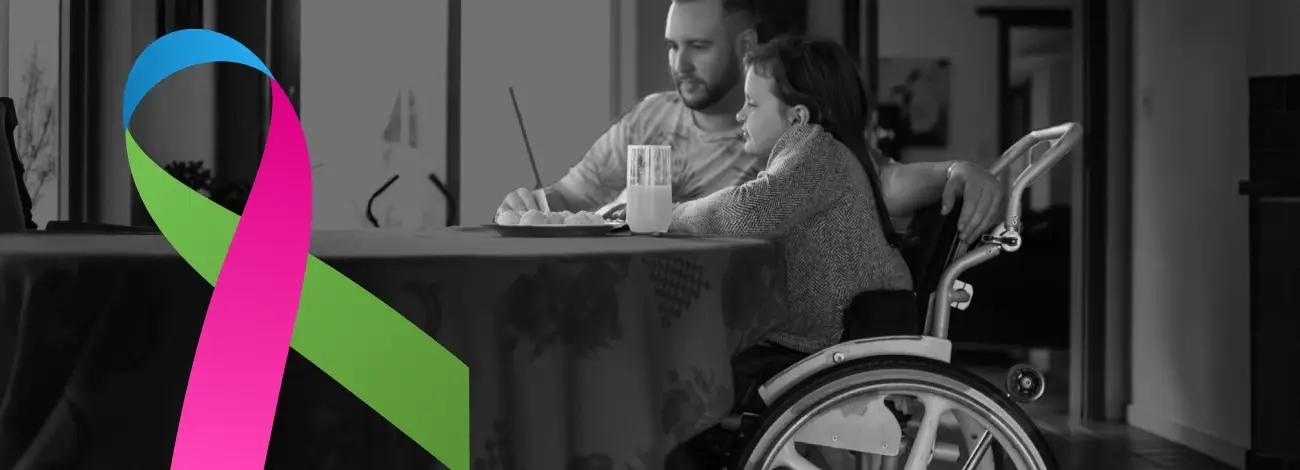
“Rare: A Documentary,” directed by Lainey Webb Moseley and John Beder, takes the viewer on a journey of challenges and trials with six families and their children living with a rare disease. It is a brutally honest, at times gut-wrenching, spotlight on these conditions that asks the question: “If this were your child, what would you do?”
“Rare” is a much-needed, beautiful and brilliantly constructed window on the world of rare diseases. It is a clarion call for change in how the world approaches the development of therapeutics.
If you’re a parent, it’s impossible to watch “Rare” and not breathe a guilty sigh of relief: “That’s not our family. Thank God I don’t have to answer that question.” But the real wisdom and genius of “Rare” is how it takes the question of living with rare disease, pulls it out of the realm of the personal and makes it everyone’s issue.
In 1968, Dr. Martin Luther King, Jr. told a Washington D.C. crowd: “We must accept finite disappointment, but never lose infinite hope.” These words perfectly evoke the ethos that “Rare” develops for the viewer. The clock is always ticking for those with a rare disease. Yet, through every burden and barrier, these six families, and others like them, are continuously reaching beyond what you might think is possible.
The clock is always ticking for those with a rare disease. Yet, through every burden and barrier, these six families, and others like them, are continuously reaching beyond what you might think is possible.
And they are paving the way for others to follow.
The Landscape of Rare Disease
There are an estimated 10,000+ rare diseases affecting more than 30 million people in the U.S., or roughly 9% of the population, and about half of these people are children. Many rare conditions are life threatening, and 30% of children with a rare disease do not make it to their fifth birthday. Of the 7,000 rare diseases for which a molecular cause has been positively identified, only about 500 have approved treatments.
The stark reality of rare disease is that therapeutic developers are slow or unwilling to engage because it’s cost prohibitive. Our ability to diagnose and understand the root causes of these conditions is expanding exponentially; however, we’re not developing the necessary treatments to address them.
This is largely because the vast majority of rare diseases are genetically driven and require newer, expensive approaches such as gene and cell therapies. It takes billions of dollars to develop these technologies, and the inherently small population of patients with a rare disease makes it difficult to recoup the research costs or conduct effective clinical trials.
Specifically, the diagnosis, care, and treatment of rare diseases carries a roughly $400 billion annual cost to the U.S. healthcare industry, amounting to 7.5% of all healthcare expenditures (based on 2024 expenditures of $5.3 trillion).
While resources for rare disease research exist now more than ever before, significant challenges remain for patients. The U.S. Food & Drug Administration’s Accelerating Rare disease Cures Program and its Rare Disease Innovation Hub are working to bridge these gaps.
Similarly, through the National Institutes of Health and its Therapeutics for Rare and Neglected Diseases program, researchers are attempting to lower barriers, and speed the development of effective treatments. Despite these efforts, rare disease patients still wait six years, on average, for an accurate diagnosis, seeing as many as 12 specialists before finding an answer.
Solutions in Unexpected Places
“Rare’s” core message is an answer to the question of “What would you do?” The answer: Real solutions for rare diseases are grass roots affairs. The parents of the children in the movie have turned into community warriors who are mustering resources and driving research into cures.
Take, for example, Casey McPherson, whose daughter, Rose, possesses a mutation in her HNRNPH2 gene that has severely impaired her development. Around 100 people have been definitively diagnosed with this mutation (although the number of undiagnosed patients could be in the thousands), and there is no cure. With such a small population, Casey could not find a pharma company or academic research group willing to take on the challenge of developing a therapy for Rose.
After much toil and failure, it occurred to Casey that each individual family seeking treatments for their child’s disease was having to “constantly reinvent the wheel.” They were all going through the same challenging journeys, only separately and without mutual support. How much more could they do if they formed a community and pooled their resources? Casey decided to find out, and founded the To Cure a Rose Foundation, with the mission of “…bringing together determined researchers and promising technology to create a brighter future for children like Rose.” Casey’s initiative aligned parents and pooled resources to address not only Rose’s therapeutic needs, but also the needs of other rare disease populations, all under one roof and without the pressures of commercialization and profit.
Casey’s initiative aligned parents and pooled resources to address not only Rose’s therapeutic needs, but also the needs of other rare disease populations, all under one roof and without the pressures of commercialization and profit.
Soon after, Everlum Bio – an Austin, Texas, biochemistry lab – and Alpha Rose Therapeutics joined the effort to develop and commercialize genetic disease treatments.
Dr. David Fajgenbaum, associate professor of Medicine at Penn Medicine and a rare-disease survivor, himself, is another example. After self-discovering a repurposed drug to treat his own rare disease, he launched Every Cure to accelerate efforts to repurpose older drugs for newer indications, effectively mobilizing an untapped reserve of solutions to address rare diseases. To date, the Every Cure team has been able to identify 14 repurposed drugs for multiple diseases, finding already existing solutions hiding in plain sight.
Biotech is Beginning to Step Up
While families and patients are leading the charge, there are elements of industry that are beginning to step up. Most recently, the first personalized CRISPR-based, gene-editing therapy was delivered to Baby KJ at the Children’s Hospital of Philadelphia (CHOP). Developed by CHOP and Penn Medicine for a fatal metabolic disorder, and delivered using lipid nanoparticles developed by Acuitas Therapeutics, the therapy successfully treated Baby KJ’s severe carbamoyl phosphate synthetase 1 (CPS1) deficiency, reversing his prospects and allowing him to thrive without the potentially severe brain damage that often results from the disease.
Gene and cell therapies – the great hope for most rare disease patients – are predominantly powered by the next-generation sequencing (NGS) platforms developed by Illumina, which also provided funding for “Rare.” This same NGS technology is driving in vivo gene-editing breakthroughs from groups such as Mammoth Biosciences, allowing researchers to engineer and deliver potentially permanent cures for rare disease patients.
Mammoth co-founder and Nobel Prize winner Jennifer Doudna recently announced a billion-dollar effort to create a therapeutic development ecosystem centered on CRISPR-based technologies to bring these treatments to the general clinical setting. Industry is starting to step up. Community models like those developed by Casey McPherson may provide a framework for efforts such as Doudna’s.
Rare Disease Drives a Future for Everyone
A hidden message to be gleaned from “Rare: A Documentary” is that innovation and future solutions are only formed when we are compelled to do so, and they are typically driven by the fringes in which need is greatest. The treatment of patients with rare diseases has already contributed significantly to our understanding of common conditions such as osteoporosis, kidney stones, and viral infections.
Indeed, rare disease may also be the great hope and acceleration needed for the technologies that drive gene and cell therapies. Dr. Catherine Lutz of the Jackson Laboratory had this to say about it: “I think a lot of these technologies are not going to advance in complex diseases. They’re going to start with rare diseases, where what we know is more tangible.”
“I think a lot of these technologies are not going to advance in complex diseases. They’re going to start with rare diseases, where what we know is more tangible.”
This is the conundrum of rare disease that comes across strongly in “Rare.” We generally understand rare diseases better, but treat them less effectively, or not at all. If we don’t change the way we see this situation, we will continue leaving nearly 10% of our community unnecessarily living with challenges that we probably have the technology to curtail or eliminate. “Rare” is an urgent call to come together, change direction, and make a massive collective difference.
“Rare” was funded by Illumina, GeneDx, Ultragenyx and The Waterman 11 Fund of the Philadelphia Foundation, with additional funding by Alexion, AstraZeneca Rare Disease, Anne and Chip Williamson, Juno, and Mahzi Therapeutics. “Rare: A Documentary” is available to stream now. For those interested in learning more about the rare disease community and available resources, the producers can be contacted at ar**************@***il.com.